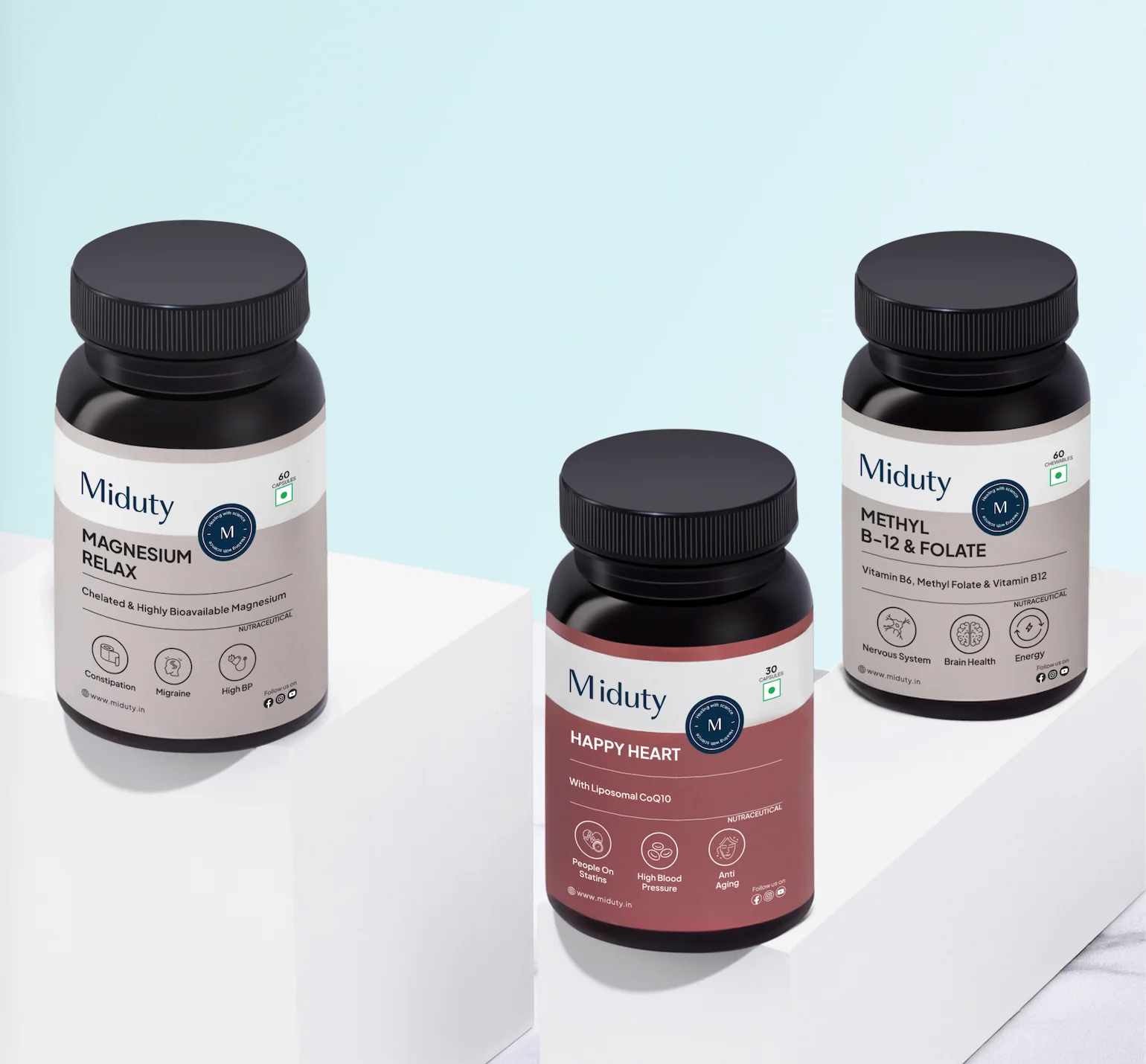
Hypertension Bundle
Do you know that the majority of people with high blood pressure or hypertension are symptom-free even when their readings are dangerously high?
Blood pressure is known as a “silent disorder” because there are no symptoms but the body can start giving some warning signs at some point of time.
Blood pressure is just a measure of the force that your heart uses to pump blood around the body. But it becomes a disease when the force is too high against the arterial walls.
Blood pressure is a combination of systolic (upper) and diastolic (lower) pressures. Systolic pressure is when the heart is beating and diastolic pressure is when the heart is at rest.
When symptoms of high blood pressure do appear, it's typically because the problem has reached a risky stage. Symptoms like the following are frequently prevalent at this point: bad headaches, severe anxiety, breathing difficulty, nosebleeds, etc.
High blood pressure develops when the pressure inside the arteries and blood vessels is too high, which affects the artery wall and creates extra stress on the heart. In addition to being a concern in and of itself, high blood pressure (HBP) also sets the stage for a number of risky medical diseases, such as stroke, diabetes, heart attack, chronic heart failure, and kidney disease.
Original: $31.89
-65%$31.89
$11.16Product Information
Product Information
Shipping & Returns
Shipping & Returns
Description
Do you know that the majority of people with high blood pressure or hypertension are symptom-free even when their readings are dangerously high?
Blood pressure is known as a “silent disorder” because there are no symptoms but the body can start giving some warning signs at some point of time.
Blood pressure is just a measure of the force that your heart uses to pump blood around the body. But it becomes a disease when the force is too high against the arterial walls.
Blood pressure is a combination of systolic (upper) and diastolic (lower) pressures. Systolic pressure is when the heart is beating and diastolic pressure is when the heart is at rest.
When symptoms of high blood pressure do appear, it's typically because the problem has reached a risky stage. Symptoms like the following are frequently prevalent at this point: bad headaches, severe anxiety, breathing difficulty, nosebleeds, etc.
High blood pressure develops when the pressure inside the arteries and blood vessels is too high, which affects the artery wall and creates extra stress on the heart. In addition to being a concern in and of itself, high blood pressure (HBP) also sets the stage for a number of risky medical diseases, such as stroke, diabetes, heart attack, chronic heart failure, and kidney disease.